Showing posts with label creative nonfiction. Show all posts

Friday, January 6, 2012

Zombies + Literacy

Essential Questions:
  • Why are zombies compelling?
  • Can ELA teachers afford to ignore a national trend?

Zombies Vs. Literacy?  Yes, the app exists - an early reading iPhone app for kids as young as 1 year.  Read about it at the App Store. I bought it - not very good, but a sound introduction to the alphabet (letters and sounds), phonic blends (and therefore rhyme), and sight words.  My 2-year old Millie loves it. BabyBinks is a developer that I have recommended, by the way.  What do they know that I am just discovering?  Zombies are trending!

Just for fun, search Amazon Children's Books for "zombies" and sort by date.  There are 368 hits, about 2/3 of them dated after 2010.  In the Books search, there are over 9,000 hits and 2011 does not appear until p.9. 

The Update [11/23/13] - Read about Zombie [tech] Ideas at Hack Education and learn about Zombie Politics with Bill Moyers.


[4/17/14 - still trending] - The Pentagon has released a zombie apocalypse defense plan. Read about it at CNN and follow a link to actual plan.  Tongue in cheek, certainly, but definitely piggy-backing on a trend.

The Rationale: Zombies have even invaded PowerPoint. Above is a screenshot from a post by Bill Ferriter - The Tempered Radical - Five Tips for Creating Powerpoint Slides...   I like his ideas, and I follow this blog.  But I was temporarily stunned by the argument made for the power of the zombie image, which to me is repulsive:
  • "Let's be honest: Audiences in today's hyper-connected, always on world have seriously fractured attention spans, y'all."
The zombie image is a grabber. Whether visually presented or stereotypically drawn in words (bleeding, blood-thirsty, brain-eating, sexless, distorted, cannibalistic, dulled to intelligent thought), it is nightmarish but mesmerizing.

So we have preK at one end of the zombie spectrum and adults (teachers) at the other.  It seems that we like to like zombiesWe like the idea of confronting the living dead. 

It turns out that this may be scientifically accurate.  Read Christina Robertson's  Why Do We Like to be 'Scared to Death' and Science Daily's Why Do People Like Horror Movies? for intelligent, if short (good for the classroom), discussions of the questions.

On the other hand, I am distressed by this summative statement from Robertson's post: "There are many ways we may choose “non-being” in our lives – by not being aware of what we think and what we are choosing, by making inauthentic decisions, by not determining our values, by following the values of others, the list is endless.  Actions leading to non-being lack authenticity and responsibility."  Psychologically, non-being is an attractive choice.  This sounds very much like the YA worldview.  One way that teachers can confront distress is to teach it - then the students help with the therapy.  We do, after all, read about a lot of distressing topics: bullying, dysfunctional families, the end of life as we know it, abuse, self-abuse, gangs, desertion, war, murder - to name a few.  Why not zombies?

So my question is this: Why are zombies an appealing choice?  Is it:
  1. because students can brainlessly interact with them (read about them, play with them, view them, laugh at them) while still feeling alive (afraid, powerful, superior, surprised, funny),  or
  2. because students instinctively identify with the concept of "non-being" and its correlatives: freedom to behave outside of the accepted moral code, and to do so without the hindrance of conscience or fear of death or physical pain, or
  3. because we can not help but grapple with the questions: What does it mean to be HUMAN? or
  4. because zombies are ugly, gawky, socially awkward, easily targeted, and - basically - victims?
  5. because zombies reflect cultural fears, appearing during those historical periods that we feel most out of control and fearful, or
  6. because of something else that students themselves can explain and define?
#2 - #6 are interesting answers for the classroom, raising zombie literacy into the realm of honest study.  Conveniently, #1 is also true, making that study attractive to kids.  So I think they deserve a PBL unit, or at least a lit circle, of their own.

The Resources: What materials are available to the literacy teacher using zombies to frame a unit?   I am assuming that this study would begin in the late middle grades, although that may be a false assumption, given the growing number of apps and visual texts with zombie content.  I personally would set the bar at 8th grade, but you have to know your class.

Fiction
  • The Forest of Hands and Teeth (Ryan - ) - I did not read the remaining books in the series, having found this book very uneven, but many YA girls love it - interesting
  • The Undead: Zombie Anthology (stories, ed. by Snell) - many of the contemporary zombie novelists are represented - great for comparative study (plots, themes, symbols, characterization)
  • Zombies! Zombies! Zombies! (stories ed. Penzler) - a collection of classic stories, some of which are the backbone of the genre
  • Book of the Dead (stories ed. Skipp) - also a Book of the Dead 2 - recommended as the best 20th century collections
  • Zombie Mommy (M.T. Anderson) - Pals in Peril series - for the 3rd - 5th crowd, by the award winning author of Feed, Octavian Nothing and other great books
  • Not Everything Brainless is Dead (Joshua Price) - 1st book in new series, exclusively for Kindle - MS will like it best
  • Day by Day Armageddon (Bourne) - journal format, making a neat twin for Brooks' World War Z and I Am Legend (film)
  • World War Z: An Oral History of the Zombie Wars (Brooks) - chillingly matter-of-fact narration with a hint of 19th century voice - an upcoming classic in the genre
  • The Terminal Experiment (Sawyer) - Nebula winning SF deals with electronic zombies
  • Boneshaker (Priest) - steampunk meets zombies
  • Never Slow Dance with a Zombie (Van Lowe) - chicklit meets zombies
  • You Are So Undead to Me (Jay) - young YA, easier - cheerleader zombie slayer
  • Night of the Living Dead (Andrews) - novelization of the classic film
  • I Am Legend (Matheson) - re-release of 1954 novel set in 1976 - also film and graphic novel - also a Kindle ebook summary and study guide
  • The Jumbee (Keyes) - zombie theme add suspense to this young-girl-falls-for-mysterious-guy-on-tropical-island tale
  • Cell (King) - nice for today's kids
  • Eaters of the Dead (Crichton) - classic - he does not specify zombies, but it is close - this is a great read
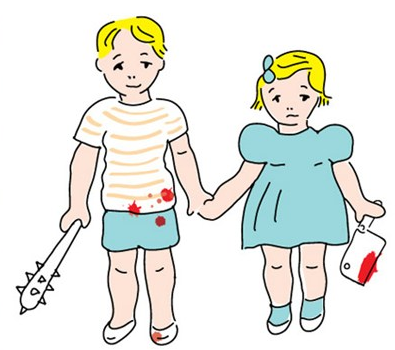
Children's Books - many of the newer titles use the zombie theme to "spoof" classic titles - some of these will be warm reminders of childhood - these provide great ideas for student authentic projects
  • Pat the Zombie, a Cruel Adult Spoof (Ximm) - don't go here as a parent or kid, but as a teacher I would show the book to grades 7+
  • That's Not Your Mommy Anymore: a Zombie Tale (Mogk) - may be the hottest new title
  • Zachary Zombie and the Lost Boy, a Story for Demented Children (John H. Carroll) - free for Kindle and part of a series currently numbering 7 - clever!
  • Diary of a Zombie Kid GN (Perry) - yes, it's illustrated
  • Goosebumps Hall of Horrors #4 - Why I Quit Zombie School (R.L. Stine) 
  • Zombie Tag (Moskowitz)
  • Zombie in Love (DiPucchio) - picture book, early reader
  • Ten Little Zombies - a Love Story (Rash) - you know the rhyme - zombified
  • Z is for Zombie (Kutner) - not your everyday alphabet book
  • Baby Bubba Wants a New Mommy (Crenshaw and Ballard) - read this one online
  • Nobody Wants to Play With Zombie Jesus (Preble) - Kindle eBook for $.99 - yes, it is offensive
 

Graphic Novels and Comics - The visual art in these can be compared to the impact of word descriptions in the above - find any humor here?  why not? 
  • The Walking Dead (Kirkman), Dead Rising - for the shoot-em game players - series - sold (read online or  download for iPad) at ComiXology - not for MS
  • Shaun of the Dead (IDW Publishing) - comic book - 4 issues
  • Night of the Living Dead TP (Russo) - prequel to the film! new characters and plot additions - there is also a Vol. 2, which introduces some contemporary plot elements
  • Richard Matheson's I am Legend (graphic novel) (Niles) - from the novel and film
  • The Zombie Survival Guide: Recorded Attacks (Brooks) - pair with World War Z - premise is that throughout history the zombies have been active
  • Zombies (Cole et.al) - gathering of great zombie comics - 2012 release
  • Remains - zombie attack comic/graphic novel - sold (read online or download for iPad) at ComiXology
  • They Do Not Die! (Brown) - undead at 18 in rural Alabama - girl teen protagonist
  • Infestation series (IDW) - zombie events affect the worlds of comic classics Ghostbusters, GI Joe, Star Trek, and others in this cross-over digital comic series sold (read online or download for iPad) at ComiXology
  • Many more titles can be found by searching ComiXology for "zombies"
Poetry
  • Little Book of Zombie Poems (Beckett) - download .pdf file - these will appeal to struggling poets
  • Aim for the Head: An Anthology of Zombie Poetry (ed. Peterson)
  • Magnetic Poetry Kit: Zombie (Amazon) - how cool is that for the creative classroom!
  • Zombie Haiku: Good Poetry for Your...Brains (Mecum) - real cheap used from Amazon - these will appeal to YA, but also are quite imagistic: 
Biting into heads
is much harder than it looks.
The skull is feisty.
Drama & Scripts- not recommending these for quality, but I have skimmed them all - offered as models and for reading in class, but students can also comment on the scripts at Simply Scripts

Film, TV, media - also check out wikipedia's list of Zombie films
  • Night of the Living Dead (Romero, 1968 - DVD) - classic film that kicked off my own study - my middle schooler's just barely made it through this one
  • Carnival of Souls - see a trailer here
  • The Living Skeleton
  • Abraham Lincoln vs. Zombies (2012 NR, Netflix) - how can your resist?
  • Shaun of the Dead (DVD) - Rated R - but out-cuts would be excellent
  • I am Legend (2007 - PG 13 - DVD) - based on I am Legend novel - zombies are more like vampires here
  • Omega Man (1971 - PG - 1971) - based on I am Legend novel - quasi-zombie-vampires here
  • The Last Man on Earth (1964 - DVD) - based on I am Legend novel - unrated
  • The Walking Dead (TV series on DVD)
  • The Returned (French with subtitles, Sundance Channel TV, 8-part series) - Netflix
  • Children Shouldn't Play with Dead Things (Ormsby, 1972 - DVD - PG) - somewhat humorous
  • The Ghost Breakers (1940 - DVD) - Bob Hope comedy!  or Scared Stiff (1953) - Martin & Lewis remake
  • Michael Jackson's Thriller (YouTube)
  • We're Alive - the Zombie Podcast - best downloaded - episodes listed here - reviewed here
  • Super 8 (2011 - DVD) - kids set out to make a zombie film, but run into something else entirely

Creative non-Fiction - Informational text - Humor

Social Networking - Collaboration
  • Lost Zombies - building a collective library of images and stories - student project? - you decide 
  • Zombie Research Society - you decide - check out the blog
  • Z-Composition - students can submit poetry, art, flash fiction and other fiction to this new e-zine
  • Zombie Nation - another place for submissions: haiku, short video, comics, more - great ideas for projects
  • Kill the Zombies - submit reviews and comments after playing
  • Simply Scripts - students can read zombie screen play scripts, comment on them, and submit their own

Simulation/Games/Apps - as of Thanksgiving (a fitting time for this search) there are 2199 apps found in an iStore search for "zombie" and my own 6 year-old grandson will only play Plants vs. Zombies on the iPad, which is his first game app ever
  • Operation: Eradicate - ($1.99 app) - tactical game for the serious gamer in which assault teams work together and independently to stop - you got it - the zombie invasion
  • Zombie Virus Survival (free app) - avoid the incoming green virus
  • The Running Dead - free app - PacMan in zombieland?
  • Zombie Life - free app in the Sims tradition (problem-solving), but to advance you need to purchase gems and gold ($.99 and up) - "fantasy violence" but also problem-solving
  • Zombie Lane - free app and also a web app - competitive social game-play, so this has a creative-thinking element - to advance you need to purchase cash ($.99 and up) - "fantasy violence"
  • Zombies vs Ninja - free app - player takes on role of ninja killing zombies, so this is a point of view exercise too - to advance you need to purchase weapons ($.99 and up) - "fantasy violence"
  • Zombie Wonderland and Zombie Wonderland 2 - inventive fun destroying and mopping up zombies - app
  • Farm Destroy: Alien Zombie Attack - free strategy 3D game app - destroy a farm full of zombie animals - no in-app purchases necessary
  • My Pet Zombie - free app - like NeoPets, these zombies can be dressed, designed, fed, etc. - for the elementary school crowd (no reading necessary) - lots of cool stuff to buy for them 
  • Resident Evil - game series features zombies - also turned into an easily read novel series, by the way (Perry)
  • Kill the Zombies - on-line game play - many options
  • The Endless Zombie Rampage - social gaming - "enjoy the carnage"
  • Play Zombie Games - I like the very simple Bounzy game, which uses simply physics to eliminate zombies - the Angry Birds of zombies
Activities - Aside from those suggested by the games, apps, children's books, and media above, you might involve students in: 
  • A Zombie 5K fund-raising run - Not kidding! - to support a health-related cause - read about the real runs
  • A comparative read of a different apocalypse novel (or film viewing) - there are tons: vampires, ice age, comet crashes, moon going off course, alien invasion, plague, unknown mysterious events causing the death of all adults, pollution, war - easy to find a read for every student
  • a spoof - a spoof of a spoof is always good fun
So there you are - Zombies + Literacy = Engagement.  It's a no-brainer : ).  

Saturday, October 22, 2011

i-Documentary and i-Journalism

DVD cover
Nigel Marvin is the star of ITV's short-lived but long-remembered and well-preserved mockumentary mini-series, Prehistoric Park.  In the series, the intrepid Nigel speaks directly to the camera from back in time, where he has gone to capture prehistoric creatures and corral them in 21st Century.  His every move, and every fact that he knows related to the adventure at hand, is chronicled by a combination of "live action" camera and his present tense commentary.  A 3rd element is provided by voice-over narration, which moves omnisciently between past and present tense as the story timeline unfolds.

It is a powerful combination!  I have often wondered why our digital classrooms do not make use of this technique for informational projects.  Most students are natural hams; all students "see" the story they have researched along with learning its facts; in connecting to historical events and people, students move fluidly back and forth along a timeline which only partly includes themselves.  The i-Documentary is a powerful tool for learning, K-12.  Why is it so powerful?
  • research must be accurate and deep, or there is no content, no detail, to flush out the video and commentary - Nigel and the narrator must be credible and omniscient
  • it is fun - fun to make, fun to watch - and that makes for learning. There is something inherently comic about a student acted documentary, but also much underlying seriousness as students strive earnestly to convey their learning
  • it is personal and persuasive - in controlling the angles, lighting, framing, setting, etc., the student director is creating mood, tone - he is not just reporting, he is making a commentary about his topic
  • it uses tense to create tension, voice-over and dialogue to control pace and tone.  
This is good literacy practice and craft. The same four points can rarely be made about a middle or high school informational essay.

Graphical i-Journalism

Gregg Cook - "What we so quietly saw"
Nigel's tools are so good and so powerful, in fact, that serious journalists have adapted them into a graphic format that some call nonfiction picto-essays.  Others call it comics.  For some critics and creators, it is graphic novel.  I call i-Journalism, a subset of creative nonfiction.  By upgrading the name, the teacher can focus students on seriousness of purpose.  The best examples of this format use graphic arts - cartoon and comic - tools to retell and comment upon a personal or a serious event, or to make a social or cultural observation.  In a sense, they are the literal representation of the movies that run "in the head" of good readers of informational text.  Think of it this way: characters (real people) "speak in quotes" but also in facial expressions, actions, body language, dress, relationship to setting, proximity to objects and to other people.  These are the stuff of graphics.

Good journalistic creative nonfiction is based in the true and actual.  But it uses personalization, narrative, and a storytelling style in place of a dry, reportorial style.  I would recommend offering students some samples of contemporary creative nonfiction journalism along with i-Journalism texts.  Sources should be contemporary journals: New Yorker, Harpers, Sports Illustrated, Slate, and the fan mags that should be found in your school library. 

Students can, and should, read great examples of i-Journalism, with the caveat that the texts are personal and persuasive.  In this, they are more literary than journalistic.  They deserve to be examined not just for factual/historical references, but for their print and visual literacy.  Questions such as "What is the message?" and "How is this message developed?" must be asked. Students should attend to the text (tone, POV, voice, language), to speaker, to the persona of the cartoonist (who is always in the story), and to the graphic design of the panels themselves (color, angle, line, close-up, layout...).  It might be useful for students to read selections from one of David Kiersh's short Cartoon Talk commentaries.  He has interesting points to make about design elements and message.

Jarod Rosello, who uses Syncopated (see description below) as a text in teaching his writing course (syllabus), focuses students on this question: "How does this text help explain what it means to be human?"  I think that is one essential question.  Another might be: "How does this text function as a Call to Action?"

Neri - Yummy
A selection of i-Journalism titles for students - MS = not recommended for middle school
  • Bloody Sunday - This picto-essay tells the story of the massacre of the Wobblies, a Pacific Northwest labor event in 1916.  Compare the graphic essay to the Wikipedia article.  It is short and free, so it makes for a good introduction to both the historical event and the iJournalism form.
  • Comics and Art: a picto-essay is available for .99 from Amazon.com (Kindle edition - read using a Kindle, iPad, or other device with the free Kindle reader installed) - this is wonderful introduction to how and why the graphic format works
  • World Comics India is dedicated to using comics to inspire activism in rural villages - there is an excellent strip example in Comics Journalism
  • Syncopated: an anthology of nonfiction picto-essays (Amazon.com) - these short pieces range from the personalized report ("Penny Sentiments") to powerful reports on historical events ("Like hell I will" and "What we so quietly saw") and people ("West Side Improvements" - which can be the backbone of an entire HS unit when read with McCann's This Side of Brightness and Toth's The Mole People).  Please do not use "Welcome Home, Brave" - written by a non-Native, it is rife with offense even though the opposite is clearly its intention. A lukewarm review of the collection, a critical review, and a positive review might guide your selections.
  • AD: New Orleans after the deluge - Neufield (Amazon) - MS - follows 6 survivors of Katrina - read the author interview on the Amazon site
  • The Complete Persepolis - Satrapi (Amazon) - memoir of an Iranian girl-to-woman
  • Joe Sacco is, I think, the most powerful i-Journalist today.  MS - Available from Amazon: Palestine, Footnotes in Gaza, Safe Area Goradze, The Fixer and other stories, War's End (the last 3 are a Bosnia trilogy, all the more powerful in light of recent war crimes trials and reportage) - Journalism contains shorter pieces from the last 10 years
  • Guy Delisle's work is more like cultural commentary.  Available from Amazon: Pyongang: a journey in North Korea and Burma Chronicles
  • Deogratias: a tale of Rwanda - Stassen (Amazon) - MS (?) - the story of the Darfur genocide, which will be powerful if read, as I experienced it, with a viewing of Raindrops over Rwanda.
  • Yummy: the last days of a southside shorty - Neri (Amazon) - based on a true story of a Chicago youth's life and death, this would be a great pairing with Monster or other work by Walter Dean Myers, including his memoir Bad Boy
  • The Magical Life of Long Tack Sam - Fleming (Amazon) - an i-Journalism memoir of a Chinese immigrant who led a fascinating life that reflected the culture in which he lived - one of my favorites
  • A Secret History of Coffee, Coca & Cola - Cortes (Amazon) - exposé history of how Coke began and continues
  • We are on our own - Katin (Amazon) - another memoir, this one of escape from the Nazis, nice because it is by a woman author - obvious pairing with Once, Milkweed, Upstairs Room, Book Thief, Maus and other Holocaust titles
  • Waltz with Bashir: a Lebanon war story - Folman (Amazon) - MS (?) - Israeli - Lebanon war - this story has also been told by the author in an "animated documentary" film of the same title (Amazon), begging comparison
and more - The American Library Association gives a prize to Great Graphic Novels for Teens, which includes a nonfiction category.  Although most of these are not what I would call i-Journalism, a few are.  The current list (2012 nominations) includes i-journalism on Sacco and Vanzetti and Israel.  Previous lists include Yummy (gangs), Gettysburg, Trotsky, and more.

Next steps for teachers:
  • Find out what texts are in your library, classrooms and resource rooms.  Build a collection! 
  • Think of a way to embed the collection in your curriculum. 
  • Urge students to create "photo essays" or "graphic essays" of a journalistic nature.  Smart phones and flip cameras are perfect tools for this.  ComicLife is a perfect fit.  Upload to YouTube - Teacher.  
  • Announce your student work to EC Ning and, of course, to your parent community.

Friday, October 21, 2011

International Texts: A Compelling Unit

source
[Look for additional titles on the Graphic Novels for MS/HS page to the right,  in this annotated list from George Ramos, Books for Expanding Global Understanding, and in SLJ's newly updated An Expanded Cultural Diversity Booklist.]

Janice Murphy, a highly qualified, highly successful, and highly regarded teacher at Freeport Middle School, has shared with me a reading workshop unit comprised of texts - fiction and memoir - from an international palette.

There is no doubt that we are living in a global world, one that challenges educators to open student eyes, as appropriate, to life beyond the bounds of a zip code.  This means, more often than not, exploring cultural, social and political realities (and/or histories) not discussed or explored in the traditional curriculum.

Janice's unit is particularly powerful for middle school (she teaches grade 8) because at its core are adolescent issues: fairness, power, identity and "place," equality (social, gender, class), and the voice of the individual within his or her culture and world.  Instead of focusing the reading on culture, history, etc., or asking endless comprehension questions, she personalizes the reading experience.  Her Essential Question is: How do the situations or events in memoirs, autobiography, prose or historical fiction have relevance in my life? 

This question is a powerful one.  Moving from text to self is at the core of reading. [2014 disclaimer: yes, I know that now, in the CCSS world, this is no longer to be encouraged].

As designed by Janice, this is a collaborative unit.  Students read in groups - some as small as two - from a list of titles that have been purchased in multiple.  There is choice.  This year, the majority of the choices were not read.  This is to be expected in some classes, especially when insecurity about reading and heightened social awareness are the rule. Nonetheless, the larger the range of choices, the more chance there is that you will find a good fit for every student.  You may also find, as I often did, that good choices and good discussions lead students to make a 2nd choice - and even a 3rd.

Janice used two straightforward organizers to focus discussion of the texts: Collaborative Homework Questions and Critical Thinking Map, both from ReadWriteThink.  In combination, they direct discussion and serve also to give the teacher a quick assessment of how individual reading is going. 

Beyond that, I don't know the details of Janice's adventure. Aside from the fact that it worked. She shared several stories of students who read, for the first time, in a new zone.  One boy discovered a voice to talk about his own culture.  High readers asked for even more challenges. Some self-professed non-reading boys connected to the realistic nature of the genre. 

You will find at the bottom of this post reading choices for upper MS and HS. More ideas welcome!  The list does not contain Holocaust fiction and (generally) non-fiction; great lists are available online elsewhere.

Here are some ideas for Quest level activities (to continue the gaming metaphor I began in the previous post):
  • view and discuss, as a class, Adichie's wonderful TED talk, The Danger of a Single Story
  • culture/nation/news/history research (including fact-checking from text) - wiki - perhaps an edu.Glogster.com poster for the wall 
  • tier 3 vocabulary lists from text - student selected - word walls (would need to contain images)
  • video and audio files, images, artifacts - edu.Glogster posters or Prezi
  • author research - wiki (same as other research)
  • character study map or Prezi - the powerless protagonist (growth or change?)
  • text passage selection - wiki - I would organize it by the Homework Questions topics - this can be huge in developing the Boss level project
  • creative writing assignments: RAFT pieces, audio recordings, POV pieces - this can be sustained as one character throughout the unit or change with reading assignments (depends on the book - students should decide)
At the Boss level, Janice is using the Social Issues discussions to have students develop essay responses to the reading.  That is perfect for her personalized Essential Question and it allows her students to develop personal statements in the introduction and conclusion.  Very fine twist on the 5-paragraph essay.

If you wanted to use a more global question rather than the personal question, you might ask students to prepare a persuasive, issue-based presentation for a global roundtable (simulated UN) on the question of ....   Groups could then use a tool like TitanPad to write and refine an actual position paper.  In classes where I have used this approach, we had sit-ins, signage, graffiti (chalk), and lots of demonstration around the key points of discussion.

Who says ELA is boring and disconnected?

Reading list:  (lexiles given where available) - MS = not recommended for middle school
  • Angel de la Luna and the 5th Glorious Mystery - Galang - Philippines
  • Bamboo People - Perkins - Burma - 680
  • Before We Were Free - Alvarez - Dominican Republic - 890
  • Behind the Beautiful Forevers - Boo - Mumbai, India - 1030 - nonfiction - MS
  • The Bite of the Mango - Kamara - Africa - Sierra Leone - 800 - MS
  • Bless Me, Ultima - Anaya - Chicano - 840
  • Boxers and Saints - Yang - China - graphic novel
  • Burma Chronicles - Delisle - Burma - graphic novel - MS
  • The Breadwinner - Ellis - Afghanistan - 630 - also Parvana's Journey (640) and Mud City (740)
  • Breaking Stalin's Nose - Yelchin - 670 - Stalin's Russia - graphic illustrations - Newberry
  • The Bride Price - Emecheta - Nigeria - 1060 (retold at 610 for MS)
  • The Brief Wondrous Life of Oscar Wao - Diaz - Dominican Republic - 1010 - MS
  • Chinese Cinderella - Mah - China, autobiographical - 960 - or the author's autobiographical Falling Leaves - 950
  • Claire of the Sea Light - Danticat - Haiti - MS
  • The Clay Marble - Minfong Ho - Cambodia - 860
  • Colibri - Cameron - Guatemala - 730
  • Collected Stories - Marquez - Columbia - MS
  • Cuba 15 - Osa - Cuban immigrants - 750
  • The Death of Vishnu - Suri - India
  • The Disappeared - Whelan - Argentina - 780
  • Exit Wounds - Modan - Israel - graphic novel - MS
  • The Farming of Bones - Danticat - Dominican Republic (Trujillo) & Haiti - MS
  • First They Killed My Father: A Daughter of Cambodia Remembers (P.S.) - Loung Ung - Cambodia - memoir - 920 - MS
  • God Grew Tired of Us - Dau - Sudan and US memoir - pair with Lost Boy, Lost Girl
  • The Grand Plan to Fix Everything - Krishnaswami - India - 770
  • A Hand Full of Stars - Schami - Syria - 810
  • Haveli - Staples - Pakistan - 1030
  • Heart of a Samurai - Preus - Japan (and US) - 760
  • Haroun and the Sea of Stories - Rushdie - 940 - India
  • Homeless Bird - Whelan - India - 800
  • Hotel on the Corner of Bitter and Sweet - Ford - Japanese American-WW2 - 730
  • The House of the Spirits - Allende - Chile - 1280 - MS
  • Inside Out and Back Again - Lai - Vietnam (fleeing at end of War) - National Book Award, Newberry - poem form - 800
  • In the Time of the Butterflies - Alvarez - 910 - MS (graphic sexuality)
  • Iqbal - D'Adamo - Pakistan - 730
  • The Jade Peony - Choy - Chinese-Canadian children
  • Kampung Boy - Lat - Southeast Asia (Muslim) - graphic novel
  • The Kite Runner - Hosseini - Afghanistan - 840 - MS - advanced readers will enjoy and appreciate his new novel, And the Mountains Echoed
  • The Life and Times of Michael K: A Novel - Coetzee - S. Africa - 940
  • A Long Walk to Water - Park - Sudan - 720
  • A Long Way Gone - Beah - Africa--Sierra Leone boy soldier - non fiction - 920 - MS
  • Lost Boy, Lost Girl: Escaping Civil War in Sudan - Dau - Sudan - non fiction - 900 - 8th+
  • The Metamorphosis - Kafka - Russia - 670
  • My Name is Not Easy - Edwardson - First People (Canada) 
  • Never Fall Down - McCormick - Cambodia boy soldier - 710
  • The Old Gringo - Fuentes - Mexico - MS
  • The Orphan Master's Son - Johnson - North Korea - definitely MS
  • Over a Thousand Hills I Walk With You - Jansen - Rwanda
  • Paradise of the Blind: A Novel - Duong Thu Huong - Vietnam - 720 - upper MS and HS
  • Persepolis - Satrapi - Iran - graphic novel - MS
  • Purple Hibiscus - Adichie - Nigeria - 920
  • The Red Glass - Resau - AZ. and Mexico - 800
  • Red Scarf Girl - Jiang - China, Cultural Revolution - 780
  • Shabanu - Staples - Pakistan - 970
  • Shiva's Fire - Staples - India - 990
  • Shizuko's Daughter - Mori - Japan - 820
  • So Long a Letter - Ba - Senegal - translated from French, Muslim woman - MS
  • Sold - McCormick - Nepal/India - 820 - verse format - MS
  • A Step From Heaven - An Na - Korean girl - 670
  • A Stone in My Hand - Clinton - Palestine (Gaza) - 540
  • The Storyteller - Llosa - Peru - MS
  • They Poured Fire on Us From the Sky: The Story of Three Lost Boys From Sudan - Ajak, Deng, Deng - Sudan - non fiction 
  • A Thousand Splendid Suns - Hosseini - Afghanistan - 830
  • Tofu Quilt - Russell - young girl in Hong Kong 1960's - poem format
  • Trash - Mulligan - unspecified underdeveloped country - 860
  • Two Old Women - Wallis - First People (Canada)
  • We Need New Names - Bulawayo - Zimbabwe - displacement, immigration of young girl - MS
  • The White Tiger - Adiga - India - MS
  • Zahra's Paradise - Amir - Iranian boy disappears after 2008 elections - graphic novel - also may be available serialized online 
Native American literature in the US can also be considered international, due to the sovereign nationhood of more than 500 Nations.  The best lists and reviews are found at Debbie Reese's American Indians in Children's Literature blog.  It is a good idea to check a title with Debbie's blog before using it in the classroom. Debbie and others have also compiled a k12 list of the Top 100 Books by Indigenous Masters.

Similarly, the Raza experience is often poorly portrayed in fiction.  Find reliable recommendations at De Colores: The Raza Experience in Children's Literature.

Another slant is the immigrant experience and the experiences of other cultures within the US, which have generated some exceptional fiction. Some of the best titles:
  • All the Broken Pieces - Burg - Vietnam boy immigrant (post-War) - poem format - HL680
  • American Born Chinese - Yang - graphic novel
  • Americanah - Adichie - Nigerian immigrants to America and London
  • An American Brat - Sidwa - Pakistan girl
  • Any Small Goodness - Johnston - Mexican immigrant to East LA barrio - 660 - reviewed here in The Raza Experience in Books for Children
  • America Street - Mazer - short story collection for MS and up
  • The Arrival - Shaun Tan - immigrant experience - graphic novel
  • Battle Hymn of the Tiger Mother - Chua - Chinese mother in America - MS
  • Breaking Through - Jiménez - Mexican immigrants
  • Brother, I Am Dying - Danticat - autobiographical, Haitian immigrants (60's) - MS
  • The Circuit - Jimenez - Mexican immigrant memoir in story form - non fiction - 880 - has sequels Breaking Through (750) and Reaching Out (910) which are more directly autobiographical
  • Drown - Diaz - Dominican immigrant (male voices) - stories - MS
  • Esperanza Rising - Ryan - US/Great depression/Mexican Am. - 750
  • First Crossing: Stories About Teen Immigrants - Gallo - short story collection for MS and up
  • God Grew Tired of Us - Dau - Sudan and US memoir - pair with Lost Boy, Lost Girl
  • Home of the Brave - Applegate - Sudanese refugee in US - poem form - 860
  • The House on Mango Street - Cisneros - Hispanic in Chicago - 870
  • How the Garcia Girls Lost Their Accents - Alvarez - Santa Domingo - 950 - MS
  • Interpreter of Maladies - Lahiri - Indian immigrants and life in India - 1050 - MS
  • The Jumping Tree - Saldana - Mexican immigrants in Texas - racism theme - 770
  • Krik? Krak! - Danticat - Haitian immigrants - stories - MS
  • The Last Summer of the Death Warriors - Stork - Mexican American - HL640 - MS (terrific pairing with The Round House)
  • Little Bee - Cleave - Nigeria immigrant to Britain - MS
  • Lost Boy, Lost Girl: Escaping Civil War in Sudan - Dau - Sudan and US - non fiction - 900 - 8th+
  • Lupita Manana - Beatty - Mexican immigrant children - 760
  • Parrot in the Oven - mi vida - Martinez - Mexican-American boy in Chicago - 1000
  • Return to Sender - Alvarez - Mexican immigrant family in Vt. - 890
  • The Namesake - Lahiri - Calcutta family immigrates to MA - 1210 - MS
  • Native Speaker - Chang-rae Lee - Korean - MS
  • The No-No Boy - Okada - Japanese, Nisei experience - 900 - MS
  • Parrot in the OvenMi Vida - Martinez - Mexican immigrant - 1000 - MS
  • Two Kinds - Tan - Chinese-American - online - also Tan's "Fish Cheeks"
  • What is the What - Eggers - Lost Boys of Sudan (based on a true story) - MS
  • When I Was Puerto Rican - Santiago - 1020 - MS
  • The Woman Warrior - Kingston - Chinese - creative nonfiction - 800